

Summer '26 is the release where Salesforce changes the words you use with customers. Sales Cloud is now Agentforce Sales. Service Cloud is now Agentforce Service. Service Cloud Voice is now Salesforce Voice. The agent has moved from a feature in the side panel to the organizing principle of the platform. For consultants, the practical implication is that every customer conversation about Salesforce in FY27 starts with "Agentforce" instead of "Sales Cloud," every demo has an agent in it, and every migration project has a different shape than it did six months ago.
This article is the consultant's lens on Summer '26: what to demo, what to recommend, where to grow your practice, what to warn clients about, and which migration projects to staff up for. The release was first published April 20, 2026, sandbox preview started May 2, 2026, and GA rolls out in waves starting June 13, 2026. The 7-step sandbox checklist at the end of this article is what to walk through with your first three pilot customers.
The rebrand: what to say to clients
The naming change is the conversation starter you don't have to invent. Sales Cloud is now Agentforce Sales. Service Cloud is now Agentforce Service. Service Cloud Voice is now Salesforce Voice. Field Service follows suit. The functionality, licensing SKUs, and underlying objects do not change. The product names in Setup, docs, partner contracts, and certifications do.
The talk track is short and accurate: "Salesforce renamed Sales Cloud to Agentforce Sales (and Service Cloud to Agentforce Service) to reflect that the agentic enterprise is now the platform's core architecture, not a side feature. Your licenses don't change. The pages your team uses don't change. The conversation about what Salesforce does in your business does." Customers who are spooked by AI marketing want to hear that licenses don't change. Customers who are leaning in want to hear that they don't have to chase a renaming wave to start using agents.
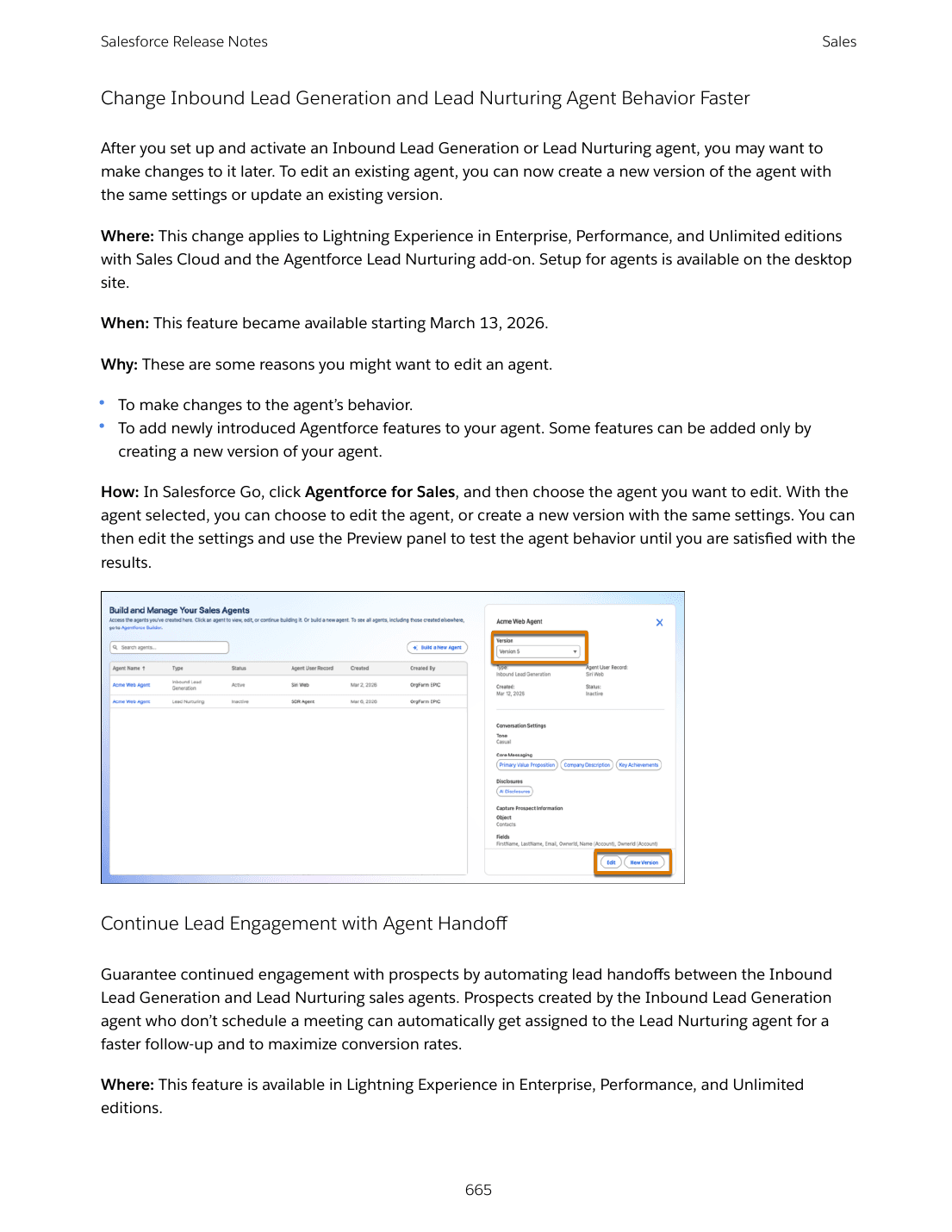
For your written deliverables (SOWs, customer playbooks, intranet docs, training materials), the rename is a search-and-replace task that takes a week. Schedule it for July 2026 so your materials match Salesforce's documentation by GA + 1 quarter.
New demo scripts: the agentforce features that show well
If you build customer demos, Summer '26 hands you six features that demo well and tell a coherent agentic-enterprise story.
Multi-Agent Orchestration (Beta) is the showpiece. Build two specialized agents (a billing agent and a shipping agent), then build an orchestrator that delegates between them in a single conversation. The visual moment when one user message routes through three subagents is the strongest demo of agentic AI value for executives.
Agentforce Sales Agent for Gemini (Beta) demos the cross-vendor surface bet. Ask a Gemini agent to "show me my pipeline this week," and watch Salesforce data appear in Google's chat experience. For customers already running Google Workspace, this is the moment they realize Salesforce takes their seller workflow seriously.
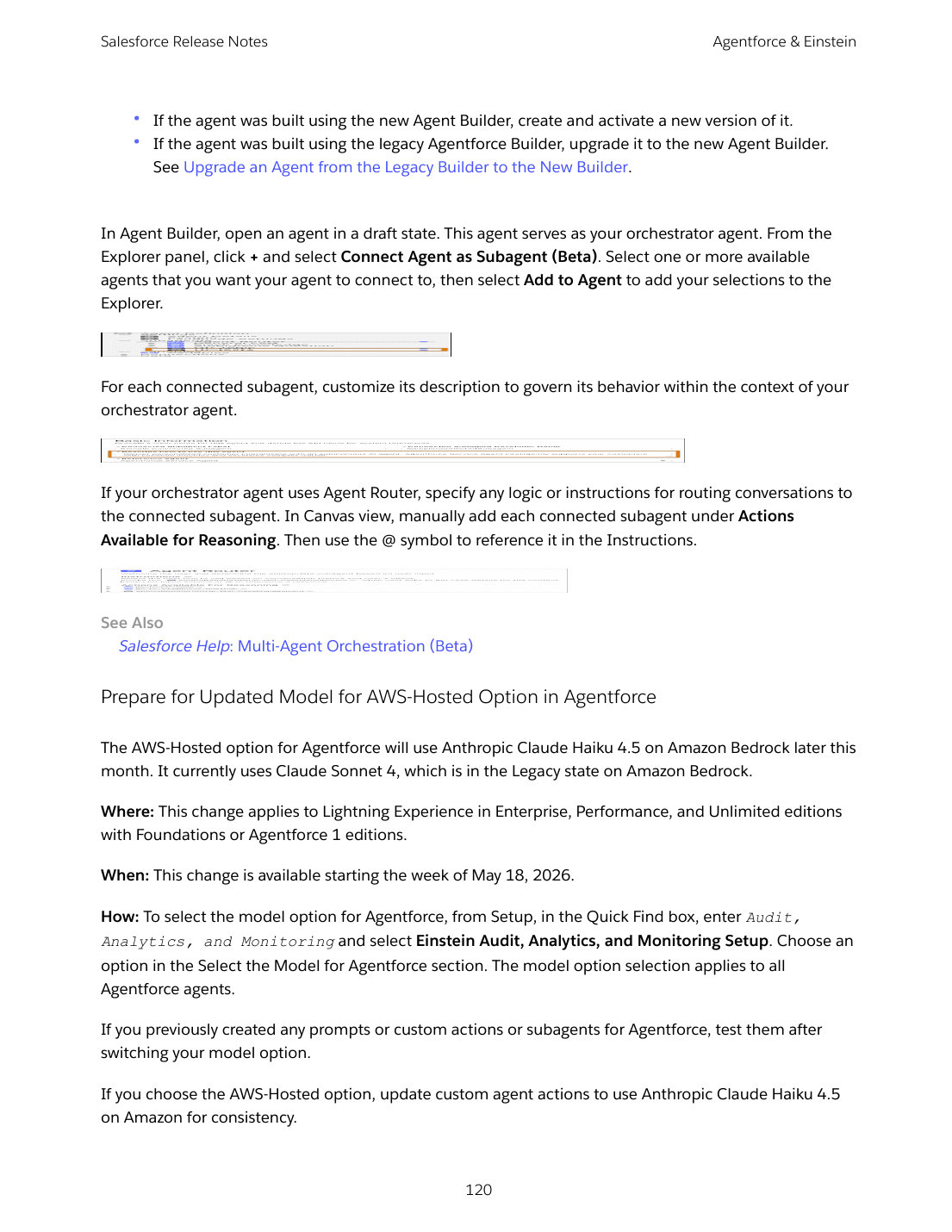
Salesforce Voice on SIP with SLA-Based Routing and Last Support Rep Routing demos the contact-center modernization story. The setup screen showing the new SIP tab next to PSTN is a one-slide signal that Salesforce takes voice seriously as a first-party channel.
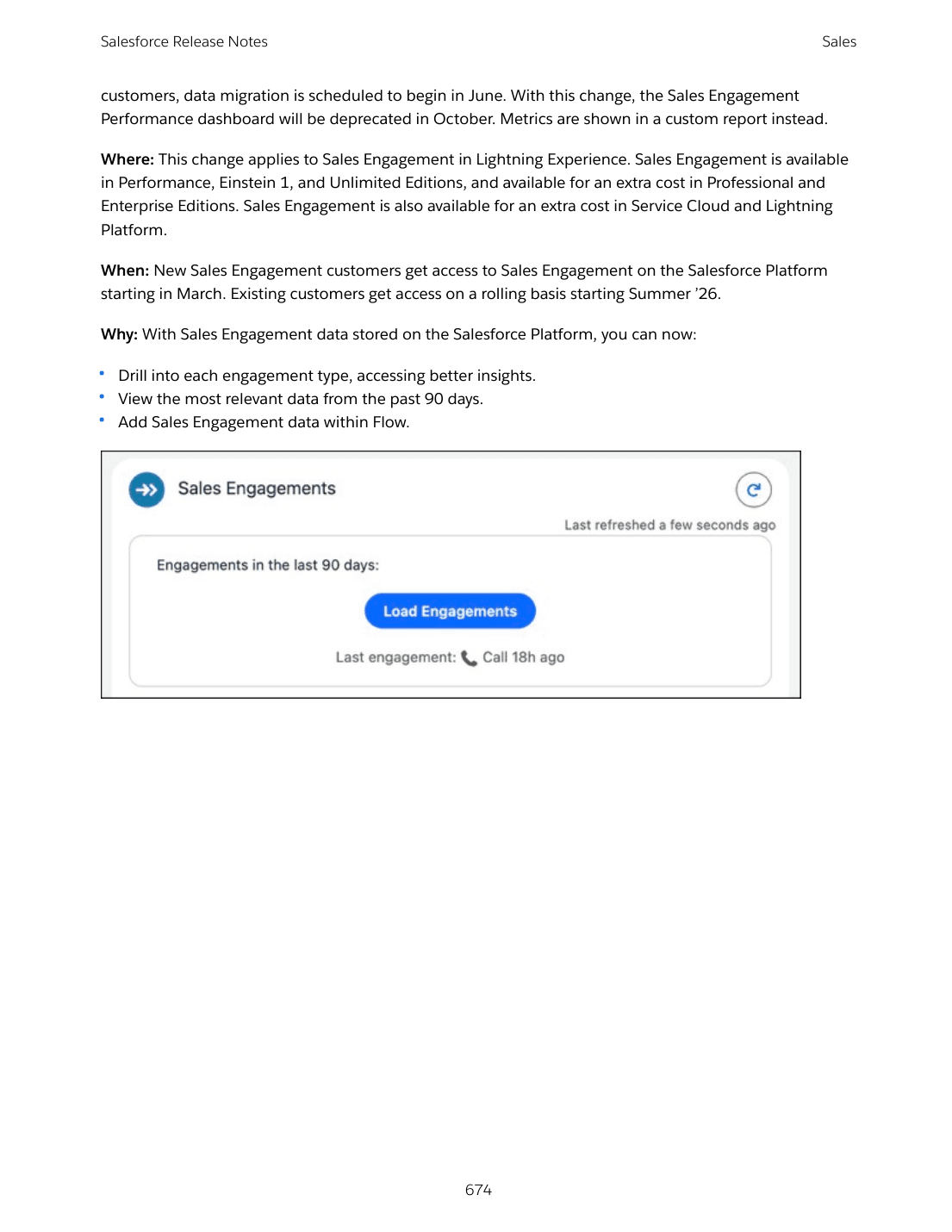
Sales Engagement on the Salesforce Platform is a small demo that lands well with sales leaders. Show the 90-day engagement metrics on a record, the drill-down by engagement type, and how Sales Engagement data is now usable inside Flow.
Pipeline Inspection's Activity Column is the demo for sales operations leaders. The activity heatmap that tracks inbound and outbound activity over 30 days is more useful for "which deals need attention" than any forecasting feature shipped in the last three releases.
Einstein Conversation Insights with Gong integration and in-person meeting transcription is the demo for sales enablement leaders. The In-Person Meeting Assistant on mobile captures a discovery call without the rep needing to take notes, then ECI surfaces signals and next steps. This is the demo where the room goes quiet for ten seconds.
Customer-segmented recommendations
Different customer segments need different Summer '26 messaging.
Mid-market customers (1,000-5,000 employees) without paid marketing automation: lead with Salesforce Foundations People Scoring and Web Tracking. The combination of lead scoring, first-party web tracking, landing pages, and simple email is enough to delay a Marketing Cloud Engagement or Account Engagement decision by 12-24 months. Frame it as "starter marketing automation included with your existing Salesforce investment, ready to graduate to Marketing Cloud Engagement when you outgrow it."
Enterprise customers (5,000+ employees) with existing Marketing Cloud Engagement: the Foundations features are not a replacement. The story is the agentic-enterprise platform changes: Multi-Agent Orchestration, Salesforce Voice on SIP, Apex user-mode default, Security Center with Agentforce. These are the platform-architecture features your enterprise customer's CIO and CISO care about.
Customers running contact centers on third-party telephony: Salesforce Voice with SIP is the credible reference architecture. Run the Voice setup demo, walk through SLA-Based Routing, and show how Agentforce Service Agent + Voice transfer-to-rep works end-to-end. For customers paying premium telephony rates, the cost-savings story is real.
Customers on legacy integrations (SOAP login(), Salesforce to Salesforce, Salesforce Functions, OAuth username-password flow): the conversation is about a migration project, not a feature. Build the migration timeline (Functions has no renewal cap, S2S retires Spring '27, SOAP login() retires Summer '27, OAuth username-password retires Winter '27) and quote the project.
Customers with Salesforce-managed X authentication provider: the migration is required this release. Create a custom X app and update SSO configurations now.
Foundations as the mid-market entry play
Salesforce Foundations is the consulting story you can run for the next four quarters. Summer '26 ships People Scoring, Web Tracking, Marketing Landing Pages improvements, Salesforce Data Pipelines Recipe Inspector, and Salesforce Scheduler enhancements all under Foundations. The combination is wide enough to support a meaningful mid-market deployment without requiring Marketing Cloud Engagement, Tableau, or other paid add-ons.
The practice motion to build:
- Discovery question: Does your client have lead scoring? Do they have web tracking? Do they have landing pages? If not, Foundations is the proposal.
- Statement-of-work pattern: People Scoring configuration, Web Tracking setup (with consent banner), Marketing Landing Pages site stand-up, one or two Sales Engagement cadences, a Tableau Next dashboard for marketing metrics. Six to ten weeks delivery, modest license uplift.
- Upsell path: as the customer's marketing needs grow, the migration path to Marketing Cloud Engagement or Account Engagement is documented. You earn the next project too.
Revenue Management and industry-specific opportunities
Agentforce Revenue Management (formerly Revenue Cloud) ships three new agents in Summer '26: Billing Employee Assistance (collections insights from payment history and disputes, data-backed dunning), Billing Service Assistance (customer-facing billing inquiries with real-time invoice and payment data), and Consumption Agent (real-time monetary impact for usage data). For consulting firms with a revenue-operations practice, these agents add a credible new service line.
Salesforce Document Generation ships Hierarchical Bundles and Grouped Data, Dynamic Watermarking, Automated Table of Contents for DOCX and PDF, the Generate Document Lightning Web Component for record pages and flows, and the ability to add Document Generation Process Requests to active batches. For Revenue Cloud Advanced customers, this rounds out the document-generation story.
[Financial Services Cloud](/terms/financial-services-cloud) adds direct API ingestion into Financial Accounts via the Salesforce Integration User License, Transaction Dispute Management as a prebuilt Salesforce Go solution, and Manage Complaints as a service process template. Insurance Policy Administration adds a billingRecord property. [Manufacturing Cloud](/terms/manufacturing-cloud) and [Health Cloud](/terms/health-cloud) customers should review the Industries Cloud monthly updates.
Salesforce Voice as a contact-center conversation starter
Salesforce Voice reaching feature parity with Telephony Providers (SIP, headsets, automatic session restoration, voicemail drop, SLA routing, last-rep routing, eleven new IVR dialects, voice number porting) makes the contact-center conversation different in FY27. For customers on Amazon Connect, Genesys, or NICE, the question becomes: do you renew the third-party telephony contract, or do you migrate to Salesforce Voice on SIP and consolidate the operating model?
The consulting opportunity is a contact-center modernization project. The deliverables are well-defined: assess current call volumes by channel, design the SIP routing topology, configure Omni-Channel Unified Routing, build the IVR flow with the new regional dialects, set up SLA-Based Routing on critical queues, configure Voicemail Drop and Last Support Rep Routing, and migrate the existing telephony partner to Salesforce Voice (with optional port-in of existing phone numbers). For customers running 50+ seat contact centers, this is a multi-quarter engagement.
The talk track: "Salesforce Voice on SIP with Agentforce Service is now the credible all-in-one contact center on the Salesforce Platform. You consolidate licenses, you get the agentic Service Agent built in, and your reps stay in the platform they already use. Let's scope the migration."
The migration projects to staff for FY27
Summer '26 ships a long list of retirements and release updates that translate into migration projects:
- [Salesforce Functions](/terms/salesforce-functions) is no longer available for purchase or renewal. Existing Functions customers need migration projects to Heroku, MuleSoft, or Apex.
- Salesforce to Salesforce retires Spring '27. Customers with active S2S integrations need migration to Partner Cloud, Data 360 One, MuleSoft Anypoint, or MuleSoft for Flow.
- Lightning Sync retires April 2027. Migration to Einstein Conversation Insights and Einstein Activity Capture.
- OAuth 2.0 username-password flow retires Winter '27. Integration teams need to migrate to the web-server or client-credentials flow.
- SOAP API `login()` (versions 31-64) retires Summer '27. Older integrations need re-authentication patterns.
- Standard Omni-Channel is scheduled for retirement. Migration to Omni-Channel Unified Routing.
- Unified Knowledge retires Summer '27. Migration to Salesforce Enterprise Knowledge.
- Salesforce for Outlook retires December 2027. Migration to the Outlook integration.
- [Apex](/terms/apex) user-mode default is the release update that breaks the most existing Apex code. Audit projects for every customer with substantial Apex.
These are not features. They are projects. Build the menu, assign delivery leads, and pitch each affected customer in Q3 2026 so the work lands in FY27.
Risk warnings: what to tell clients about
A few things to flag to clients early so you don't surprise them at GA:
- Chatter is off by default in new orgs. If they spin up a new sandbox or Developer Edition and try to use Case Feed, they need to enable Chatter first.
- Profile Filtering is enabled by default starting Winter '27. Their security, support, and license teams need View All Profiles assigned now.
- TLS 200-day certificates and Salesforce stopping individual cert-rotation announcements on July 6, 2026. If they pin certs anywhere, they have a problem.
- WCAG 2.2 enforcement changes page-header and modal behavior at 200%+ zoom. Their accessibility team should test in sandbox.
- Salesforce-Managed X (Twitter) Authentication Provider retirement is enforced this release. Custom X app needed.
- Adopt Authorized Email Domains is enforced Winter '27 for orgs that previously had Support disable email verifications.
The pattern is the same as every release: the architectural shifts get the headlines, but the deadlines hit your customers' production orgs. Surface them early and you become the consultant the customer trusts.
Practice growth areas
Summer '26 opens four growth areas for the consulting practice:
- Agentforce strategy and implementation. Multi-Agent Orchestration, the new Agent Builder, Customize Managed Prompt Templates with Overrides, and ADL Connect API give you a real Agentforce implementation methodology to take to customers. Start with a single-agent build in a sandbox, then expand to subagent composition.
- Salesforce Voice contact-center migrations. Customers running third-party telephony are open to consolidation if you can scope the migration cleanly.
- Foundations marketing stack for mid-market. People Scoring + Web Tracking + Marketing Landing Pages is enough to anchor a marketing-on-Salesforce engagement without Marketing Cloud Engagement licensing.
- Apex user-mode security audit. The Apex audit that comes with the user-mode default is a fixed-fee engagement most customers will need. Build the methodology now.
What this release means for consultants
Summer '26 is a release that changes how you talk to clients about Salesforce. The rebrand is the surface. The architecture is what matters underneath: Multi-Agent Orchestration as composition primitive, Salesforce Voice as a first-party channel, Foundations as a mid-market entry, the long retirement list as a migration backlog. Every consultant's FY27 motion is going to include some combination of these.
For the configuration view, see Admins. For the code-level migration, see Developers. For the reference-architecture analysis, see Architects. For the curated decision list of the ten features that matter most across roles, see the Top 10.