
Slack Code Makes Coding Multiplayer
Slack shipped Slack Code on Thursday, a set of project channels where a coding agent writes, diffs, and previews work in front of the whole team. It is free on every Slack plan. The five founding agents are Claude, ChatGPT, Devin, GitHub Copilot, and Vercel, and Salesforce's own Agentforce Vibes is not among them. Here is what the launch actually gives you and what it quietly says about the roadmap.
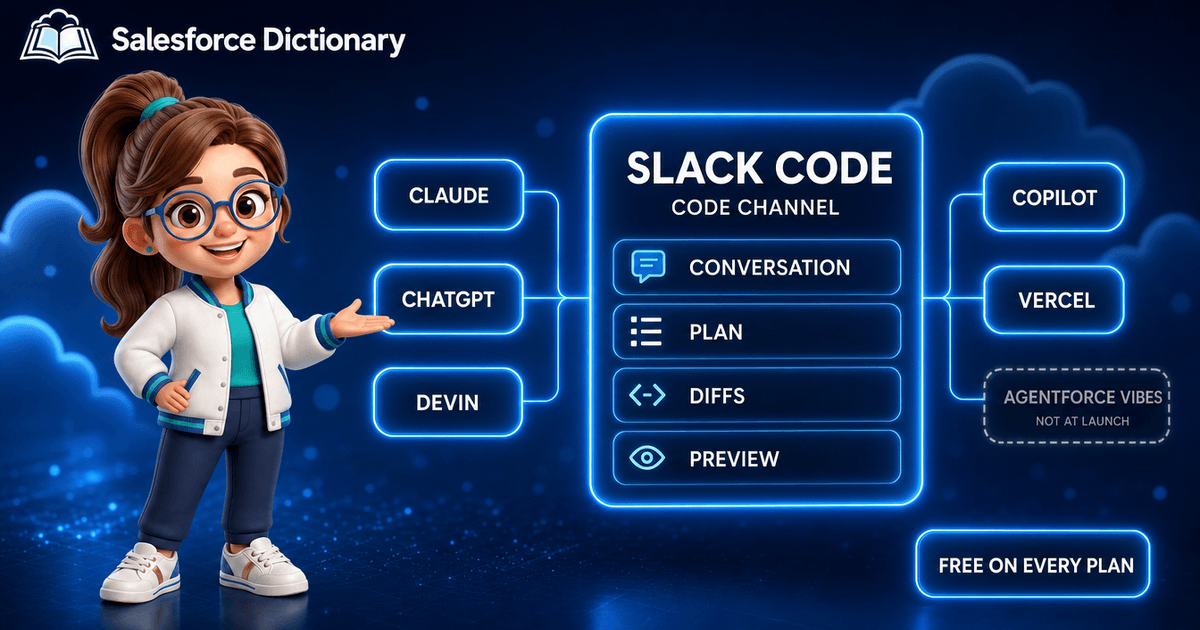
Slack shipped a product yesterday that drags AI coding out of a private tab and into a channel where your entire team watches it work. It is called Slack Code, it is live today on every Slack plan at no extra cost, and the list of agents it launched with is the most interesting part of the announcement.
Five agents are founding partners: Claude, ChatGPT, Devin, GitHub Copilot, and Vercel. Salesforce's own coding agent is not one of them.
What A Code Channel Actually Is
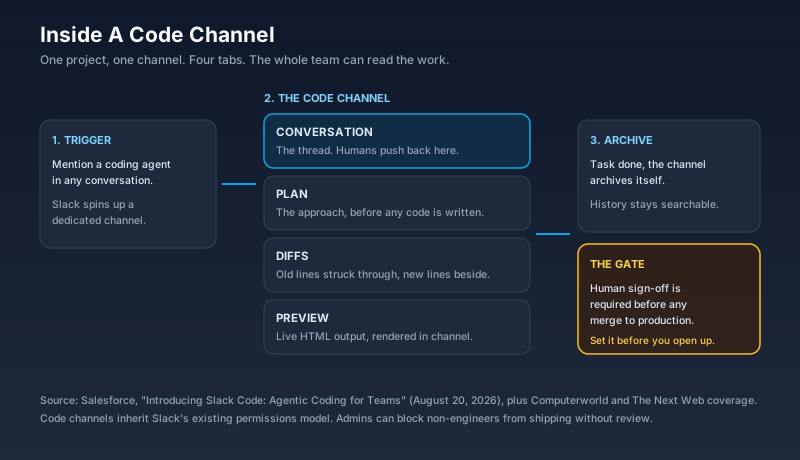
The mechanic is simple enough to explain in a sentence. Somebody mentions a coding agent inside any Slack conversation, and Slack spins up a dedicated channel for that piece of work.
What lives inside the channel is where the design shows. Each code channel carries tabs: the conversation itself, the agent's plan before it writes anything, the code diffs rendered the way any developer expects them (old lines struck through, new lines beside), and a live preview of HTML output. Reviewers read the diff, run the preview, push back in the thread, and approve. When the work is done the channel archives itself, and the whole record stays searchable in Slack alongside every other decision your team made that week.
One project, one channel. That is the organising idea, and it maps onto how most engineering teams already scope work.
Rob Seaman, EVP and GM of Slack, framed the pitch on Salesforce's announcement page: "AI only creates value when it's part of how a team actually works, not something people go do alone" in another tab. Slack CMO Ryan Gavin put the same idea in operational terms to SiliconANGLE, describing the target as compressing the distance between an idea that a team had and code that a team shipped.
The claim is defensible. The waste in most agentic coding today is not the model. It is that one person runs a session in a terminal, gets output nobody else saw, then spends two days explaining it in standup.
The Founding Partner List, And The Name That Is Missing
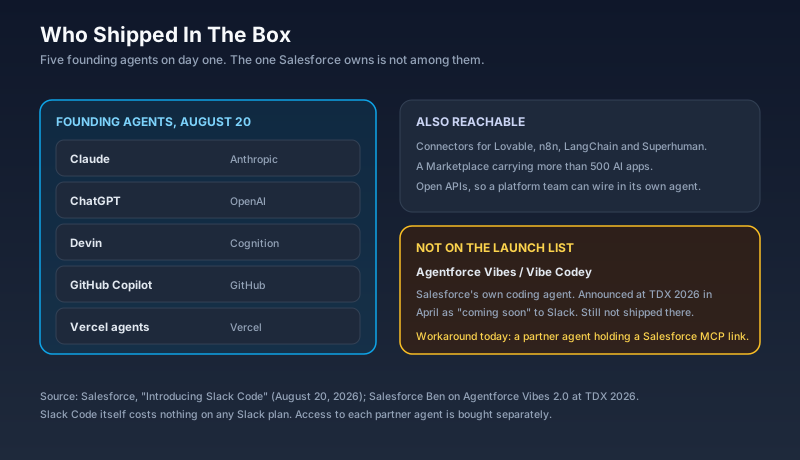
Read the partner list the way you would read a GA table. Claude, ChatGPT, Devin, GitHub Copilot, and Vercel are the named founding agents. Around them sit connectors for Lovable, n8n, LangChain, and Superhuman, a Marketplace with more than 500 AI apps, and open APIs so a platform team can wire its own agent in.
Agentforce Vibes, which is Salesforce's own vibe-coding product and ships an agent called Vibe Codey, is not on that list. At TDX in April, Salesforce said Vibe Codey would build across web, mobile, and, in its own words, "coming soon" to Slack. Four months later, Salesforce launched the flagship team-coding surface in the product it owns, and the seat at the table went to five competitors instead.
There are two readings. The charitable one is sequencing: Slack Code is a platform, platforms launch with partners, and the Salesforce-native agent arrives when Vibe Codey's Slack surface is finished. The less charitable one is that Salesforce has decided the model layer is somebody else's business and its own advantage sits in the data, the permissions, and the workflow underneath. Both readings point at the same near-term reality for you. If your team wants an agent in Slack that already knows what an Apex trigger is, it is not shipping in Slack Code this week.
That gap has a workaround, and it is the one Salesforce has been building all year. Agentforce Vibes is extensible to Claude Code, Cursor, and Windsurf through the Salesforce DX MCP Server, and Wednesday's Data 360 MCP Server GA put another 200 or so Connect APIs behind an MCP endpoint. Claude is a founding Slack Code partner. So the Salesforce-aware path exists today, it just runs through a third-party agent holding a Salesforce MCP connection rather than through a first-party button.
ChatGPT Sitting Next To Claude Is Not An Accident
The other name on the list deserves a beat. Salesforce has spent this year deepening its Anthropic relationship, including a reported multi-billion-dollar position and a large committed spend. ChatGPT arriving as a co-equal founding partner in Salesforce's flagship collaboration product says the strategy is a marketplace rather than an alliance.
Cat Wu, who leads Claude product at Anthropic, described the value as context: "Slack Code gives teams a dedicated channel where the people, the context, and Claude work together from the start." GitHub CPO Mario Rodriguez put the boundary more bluntly: "Humans set direction, agents close the loop."
Both statements are true of any of the five. Which is the point. Slack is positioning itself as the room, not the resident.
The Governance Question Nobody Solved
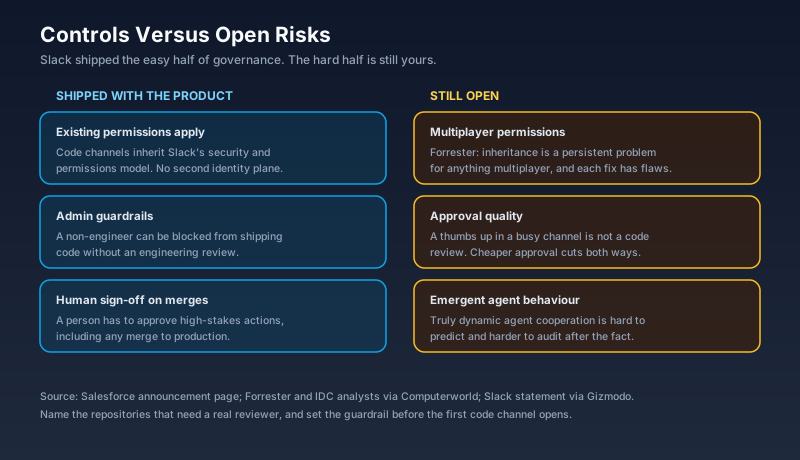
Slack's answer to the obvious risk is that code channels inherit the existing Slack permissions and security model, and that admins can set guardrails so a non-technical member cannot ship code without engineering review. A Slack spokesperson, Gianna Dimick, told Gizmodo that human approval is required for high-stakes actions like merging to production.
That is the right shape of control. It is also the easy half.
Will McKeon-White at Forrester flagged the hard half to Computerworld: permissions are a persistent problem for anything multiplayer, and every approach to inheriting them carries flaws. His second concern is further out. Multi-agent collaboration in environments that work today is not very dynamic, and genuinely dynamic agent cooperation invites emergent behaviour that is hard to predict and harder to audit. IDC's Wayne Kurtzman offered the sober middle: some companies will find this early to market, others will take the first-mover position.
There is a softer failure mode that matters more day to day, and The Next Web named it well. A thumbs up in a busy channel is not a code review. Moving approval into the same surface as jokes, standups, and incident chatter lowers the cost of approving, which is what you want for a copy change and what you do not want for a class that touches billing. Configure the guardrail before the first channel opens rather than after the first bad merge.
What This Means If You Build On Salesforce
Three practical takes.
First, Slack Code is a general software development surface, not a Salesforce metadata surface. Nothing in the launch says an agent in a code channel understands your org's objects, validation rules, or deployment model. If you want that, the agent needs a Salesforce MCP connection and a scoped integration user, and that plumbing is your work, not Slack's.
Second, the free-on-every-plan pricing is a real signal about intent. Salesforce is not monetising Slack Code directly. It is monetising the assumption that once the coding conversation lives in Slack, the rest of the agentic enterprise follows it there. That is the same thesis as Slack as the front door, applied to engineering.
Third, if your organisation has been holding a line that agent output stays inside developer tooling, that line moved yesterday without your input. Product managers, designers, and support leads can now tag an agent and start work in a channel. Decide this week whether that is a capability you enable deliberately or a thing you discover in an audit.
The Money Backdrop
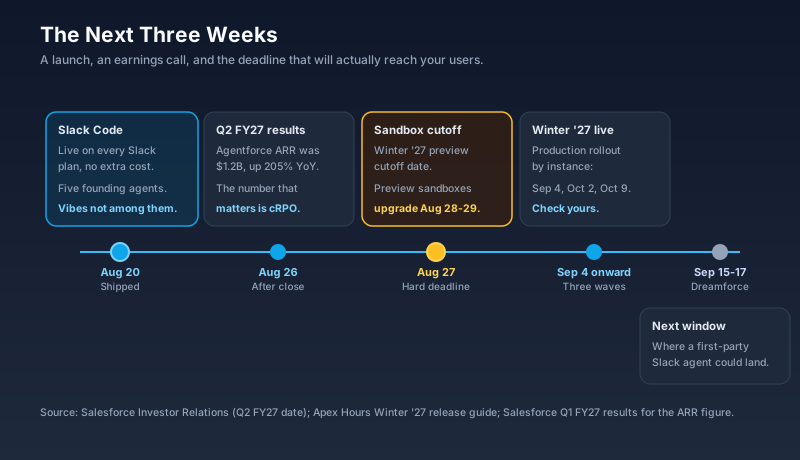
Slack Code lands six days before earnings, and that timing is not coincidence.
Salesforce reports second-quarter fiscal 2027 results on Wednesday, August 26, after the close. The stock is down more than 20% this year and trades near 14 times forward earnings, a level it has rarely seen. Marc Benioff's term for the fear driving that discount is the SaaSpocalypse: the argument that generative AI lets companies build their own software instead of buying seats. Salesforce's financial response has been aggressive. The Motley Fool put first-quarter repurchases at a record $27 billion, combining the $25 billion accelerated repurchase funded with debt and normal buybacks funded from cash flow.
Slack Code is the product-side answer to the same fear. If vibe coding is going to happen at your customers regardless, the defensible position is owning the room it happens in. Whether that argument holds up depends on the number analysts have been fixated on since May, which is not Agentforce ARR (it grew 205% year over year to $1.2 billion last quarter) but cRPO. Agentforce revenue that does not show up in contracted obligations is a demo budget, not a platform.
What To Do This Week
Four things, in order.
Open Slack admin and check who in your workspace can install and invoke agent apps today. Slack Code being free means the constraint is your app-approval policy, not procurement.
Pick one low-stakes repository and run a single code channel end to end with one agent. Watch the diff tab and the preview tab specifically, and decide whether your reviewers can actually judge quality from that view.
Write the guardrail before you widen access. Name the repositories that require a human reviewer, name the reviewer, and set the admin control so a non-engineer cannot merge.
Then close Slack and check the calendar, because the Winter '27 sandbox cutoff is August 27. Sandboxes on preview instances upgrade across August 28 and 29, and production rolls out September 4, October 2, and October 9 depending on your instance. If your sandbox refresh needs to land on the preview side, that decision has six days left, and it will matter more to your users in October than any coding channel does.
About the Author
Dipojjal Chakrabarti is a B2C Solution Architect with 29 Salesforce certifications and over 13 years in the Salesforce ecosystem. He writes and edits salesforcedictionary.com, published by KineticBit Inc., to help admins, developers, architects, and cert/interview candidates sharpen their fundamentals. More about Dipojjal.
Share this article
Sources
- Introducing Slack Code: Agentic Coding for Teams (Salesforce, August 20 2026)
- Salesforce introduces Slack Code to bring agentic team coding into the open (SiliconANGLE, August 20 2026)
- New 'Slack Code' turns AI coding into a team activity (Computerworld, August 20 2026)
- Slack launches Slack Code, where teams and AI agents build together (The Next Web, August 20 2026)
- Slack Has (of Course) Launched a Vibe Coding Tool (Gizmodo, August 20 2026)
- Salesforce Headless 360 and Agentforce Vibes 2.0 Revealed at TDX 2026 (Salesforce Ben)
- Marc Benioff's Salesforce Spent a Record $27 Billion on Stock Buybacks in a Single Quarter (The Motley Fool, August 21 2026)
- Salesforce Announces Date of Second Quarter Fiscal 2027 Earnings Release and Webcast (StockTitan)
- Salesforce Winter '27 Release Guide: Key Dates, Major Updates, and How to Prepare (Apex Hours)
Related dictionary terms
Practise it
Five questions on Agentforce Specialist
Exam-style questions with an explanation after each one. No account needed, and your answers build a weak-topic map once you have one.
More news
Vibe Coding Reaches the Enterprise
Starbucks is building in-house AI tools against a $400M software bill, and Salesforce Ben calls vibe coding a survival test for Salesforce. Plus: the community delivers its verdict on the permissions U-turn.
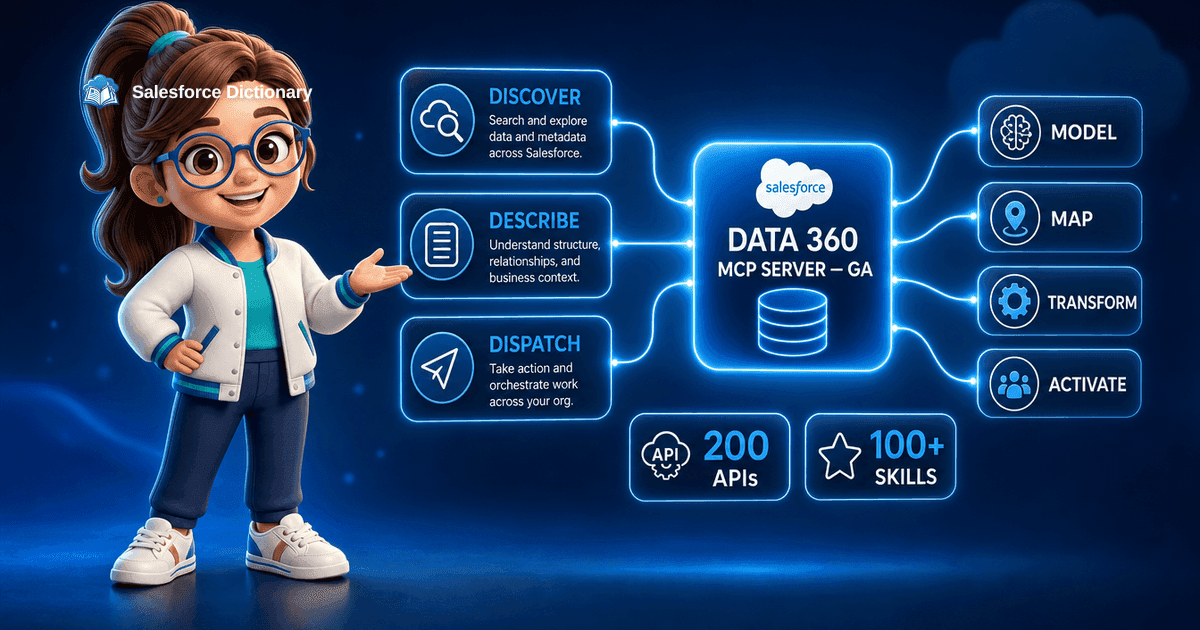
Data 360 MCP Server Goes Live
Salesforce shipped the Data 360 MCP Server to GA yesterday along with a 100 plus Skills repository, but left the umbrella Headless 360 MCP Server in open beta. Here is what actually shipped and what to test before Dreamforce.
Comments
No comments yet. Start the conversation.
Sign in to share your take on this article. Your account works across every page.