
Salesforce's September Adoption Test
Salesforce booked two investor events on Monday and renamed the format. The February slot was called Platform Evolution and Innovation. This one is called Product Adoption and Momentum, and the number it exists to defend is the Agentic Work Unit: 3.2 billion of them last quarter, up 97% in three months. That unit is not an investor abstraction. It is the thing your Flex Credits meter counts.
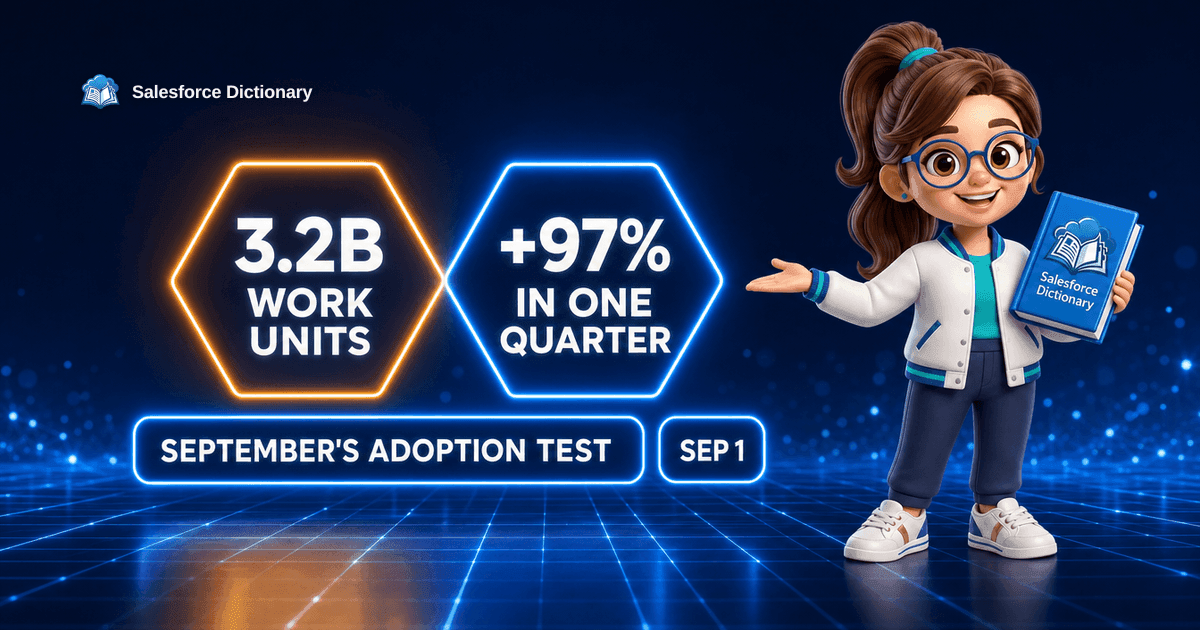
Salesforce published a two-line investor advisory on Monday afternoon. Two events, both in September. A webinar this morning at 8:00 Pacific, and an Investor and Analyst Session at Dreamforce on September 16.
The webinar itself is a routine post-earnings format. The title is the part that changed. In February, after the Q4 FY26 results, the same slot was called the Agentforce 360 Platform Evolution and Innovation webinar. Today's is called the Q2 FY27 Product Adoption and Momentum webinar.
Salesforce renamed its investor slot from what it is building to whether anybody is using it. That is not a coincidence six days after a quarter whose headline profit came mostly from a mark on a private company's shares.
What Is Actually On The Calendar
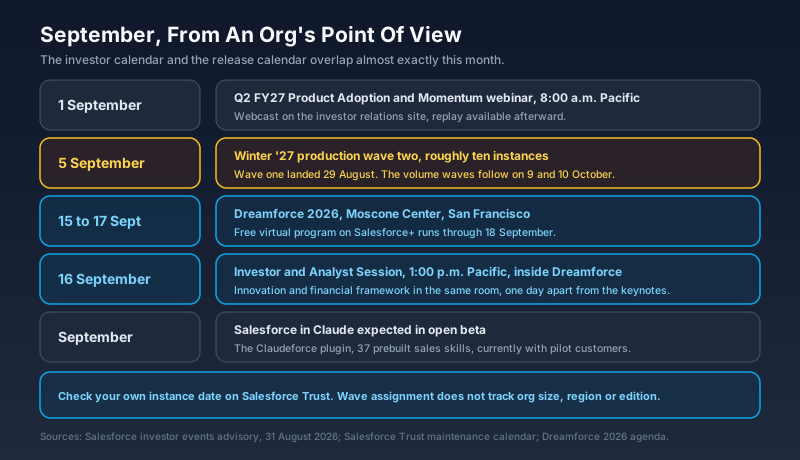
The advisory names both events precisely. The Product Adoption and Momentum webinar runs today, September 1, at 8:00 a.m. Pacific, described as an overview of recent product updates and innovation strategy with open Q&A. The Investor and Analyst Session runs on Wednesday, September 16 at 1:00 p.m. Pacific, in San Francisco, during Dreamforce, and is described as a presentation on innovation and financial framework.
Both are webcast on the investor relations site with replays afterward, so you do not need a Dreamforce badge to watch either one.
Two weeks apart, both about adoption, both scheduled the same afternoon. The quarter Salesforce reported on August 26 delivered $5.90 in non-GAAP earnings per share against a $3.27 consensus, and $2.53 of that came from gains on strategic investments. The operating beat was roughly ten cents. Guidance was raised, cRPO grew 14%, and the software business was genuinely fine. None of that stops the obvious question from an analyst who reads filings: show me the usage.
September is the month Salesforce has chosen to answer it.
The Number They Will Answer With
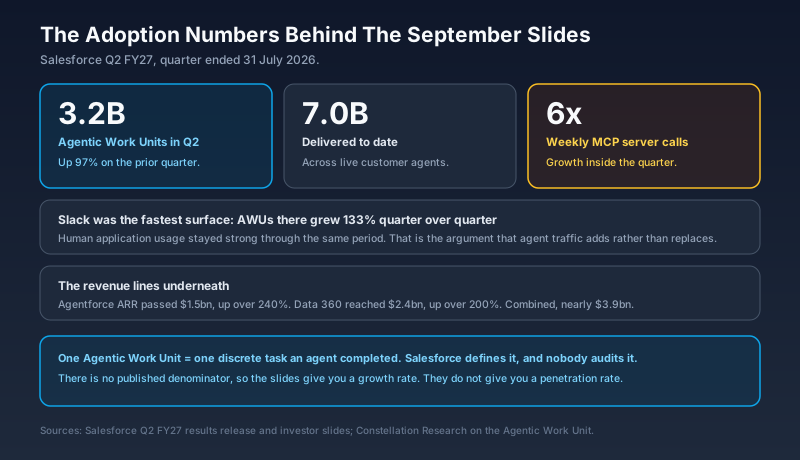
The metric Salesforce has been building toward all year is the Agentic Work Unit. Salesforce defines it as one discrete task completed by an agent: a decision made, a record updated, a workflow triggered.
The Q2 FY27 slides put AWUs at 3.2 billion for the quarter, up 97% from Q1, with 7.0 billion delivered in total across live customer agents. Slack was the fastest surface on the page, growing 133% quarter over quarter. Weekly Model Context Protocol server calls grew six fold in the same three months.
That last figure deserves more attention than it got. Salesforce paired it with a note that human application usage stayed strong through the same period. The company is arguing that agent traffic is additive rather than substitutive, which is the direct rebuttal to the "AI eats SaaS" thesis that has been sitting on the stock all year. Whether it holds for a second quarter is a real question. For one quarter, it is at least a coherent argument backed by a number.
Patrick Stokes framed the point of the metric on the earnings call in terms of efficiency: tokens consumed against work performed, compared across customers, so you can see who is getting real output per token and who is burning inference on nothing. That is a sensible internal metric. It is also, conveniently, a metric that goes up when customers spend more.
An Agentic Work Unit Is A Line On Your Bill
Here is the part that matters if you run an org rather than a portfolio.
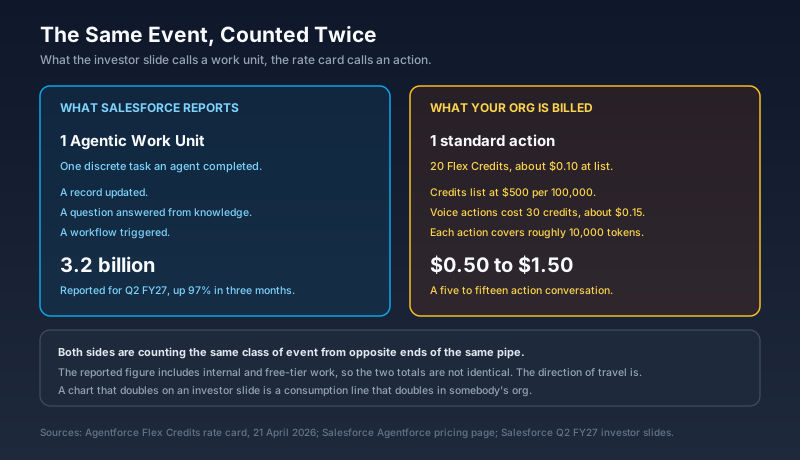
Salesforce's published Flex Credits rate card prices a standard agent action at 20 Flex Credits. Credits list at $500 per 100,000, so a standard action is $0.10. Voice actions are 30 credits, or $0.15. Each action covers roughly 10,000 tokens. A typical agent conversation runs five to fifteen actions, which puts it between $0.50 and $1.50, against the flat $2.00 per conversation under the older Agentforce Conversations model.
Now read the investor metric again. An Agentic Work Unit is a discrete task completed by an agent. A billable action is a discrete task performed by an agent. They are not identical, because Salesforce counts internal and free-tier work in the reported figure and the rate card only bills what your contract covers. But they are counting the same class of event from opposite ends of the same pipe.
So when a chart doubles on an investor slide, the same doubling is happening on somebody's consumption line. Yours, if you moved to Flex Credits.
The practical version: if your Agentforce usage grew anything like 97% last quarter, your credit burn did too, and the renewal conversation you are walking into is priced off that curve rather than off seat count. Pull your consumption trend before the pre-Dreamforce quote lands, not after.
What The Number Cannot Tell You
Three limits, and none of them are conspiracy theories. They are just what the metric is.
There is no denominator. Salesforce publishes AWUs delivered, not AWUs per customer, per org or per licensed user. A 97% quarterly rise is compatible with broad adoption and with a handful of very large deployments scaling hard. Constellation Research made the same point when the metric first appeared: it is nascent, and what the totals signify for an individual enterprise is not yet clear.
It is company-defined and unaudited. Revenue and cRPO sit inside a filing and get reviewed. An Agentic Work Unit is whatever Salesforce says it is this quarter. If the definition widens, the number rises without any customer doing anything differently.
Work completed is not work that was wanted. A record update an agent made and a human reverted counts once, maybe twice. This is the gap the TD Cowen partner survey we covered on August 27 keeps pointing at: only about a third of Salesforce partners reported strong customer interest, down quarter on quarter, while the platform numbers went vertical. Agents doing a lot of things and customers getting a lot of value are related, not the same.
None of this makes 3.2 billion a bad number. It makes it a number that needs the next quarter to mean something.
The Same Two Weeks Land On Your Org
The investor calendar and the operational calendar overlap almost exactly this month, which is the useful accident here.
The second Winter '27 production wave lands on September 5, covering roughly ten instances, after the first wave on August 29. The volume waves are on October 9 and 10. Preview sandbox testing has been open since August 28, so if your instance is in the October group you still have five or six weeks, and if it is in the September 5 group you have this week.
Check Salesforce Trust for your own instance rather than assuming. Wave assignment does not track org size, region or edition, and the enforcement list moved twice in the ten days before the first upgrade.
Dreamforce runs September 15 to 17 at Moscone Center, with the free virtual program on Salesforce+ through September 18. The Investor and Analyst Session sits inside it on September 16. Expect the roadmap detail and the financial framing to arrive within a day of each other, which is a better week for reading intent than any earnings call.
The open beta of Salesforce in Claude, the Claudeforce plugin with its 37 prebuilt sales skills, is also expected this month. If it ships in beta before Dreamforce, the adoption story on the September 16 slides gets a new surface to point at.
What To Do This Week
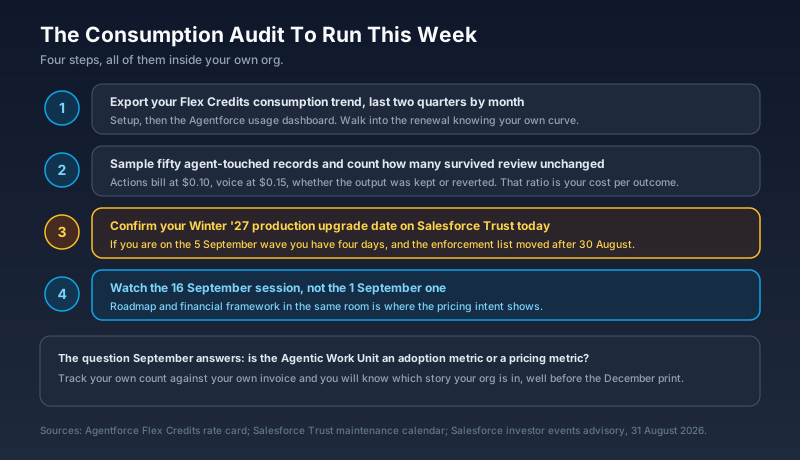
Pull your Flex Credits consumption trend now. Setup, then your Agentforce usage dashboard, and export the last two quarters by month. If Salesforce is going to sell growth by consumption, walk into the renewal knowing your own curve. A finance stakeholder who has read the investor deck will ask, and "we will find out" is a weak answer in a pricing conversation.
Separate agent actions you asked for from agent actions you inherited. Standard actions bill at $0.10 and voice at $0.15 whether the output was used or reverted. Sample fifty recent agent-touched records and check how many survived human review unchanged. That ratio is your real cost per outcome, and nobody else is going to calculate it for you.
Confirm your Winter '27 upgrade date on Trust today. If you are on the September 5 wave you have four days, and the enforcement list that applies is the one published after August 30, not the one from the August 19 release notes.
Watch the September 16 session, not the September 1 one. Today's webinar is a product overview built for analysts. The Dreamforce session pairs the roadmap with the financial framework in the same room, which is where you find out whether AWUs are being positioned as an adoption metric or as a pricing metric. Those are different futures for your renewal.
The honest read on this month is that Salesforce has picked a genuinely better number to be judged on. Agentic Work Units describe work that happened, which is more than most AI metrics manage. The catch is that the same unit describes work you paid for, and Salesforce gets to define it. Track your own count against your own invoice, and you will know which of those two stories your org is living in well before December.
About the Author
Dipojjal Chakrabarti is a B2C Solution Architect with 29 Salesforce certifications and over 13 years in the Salesforce ecosystem. He writes and edits salesforcedictionary.com, published by KineticBit Inc., to help admins, developers, architects, and cert/interview candidates sharpen their fundamentals. More about Dipojjal.
Share this article
Sources
- Salesforce Announces Upcoming Investor Events (StockTitan)
- Salesforce schedules investor events in September (Investing.com)
- Salesforce Delivers Record Second Quarter Fiscal 2027 Results (Salesforce Investor Relations)
- Salesforce Q2 FY27 slides: AI drives triple-digit ARR growth (Investing.com)
- Salesforce's Agentic Work Unit: What you need to know (Constellation Research)
- Agentforce Flex Credits Rate Card, 21 April 2026 (Salesforce)
- Agentforce Pricing (Salesforce)
- Dreamforce 2026 (Salesforce)
Related dictionary terms
Practise it
Five questions on Agentforce Specialist
Exam-style questions with an explanation after each one. No account needed, and your answers build a weak-topic map once you have one.
More news

Salesforce's Rule of 50 Gap
J.P. Morgan started coverage of Salesforce at Overweight with a $250 target on Thursday, a day after UBS warned about the setup into August 26 earnings. Both notes turn on the same 4.7 points.
Partners See No Agentforce Revenue
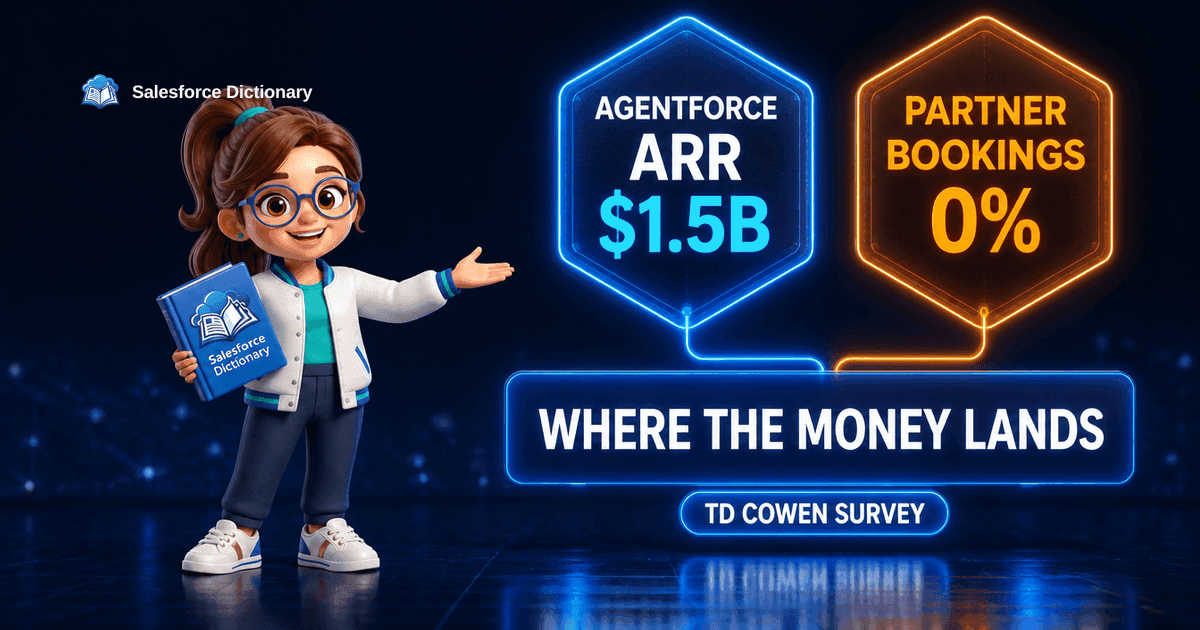
Salesforce reported Agentforce ARR past $1.5 billion this week. A TD Cowen partner survey found zero partners crediting Agentforce for bookings. Here is why both numbers are true and what it changes for the channel.
Salesforce's Beat Was Anthropic
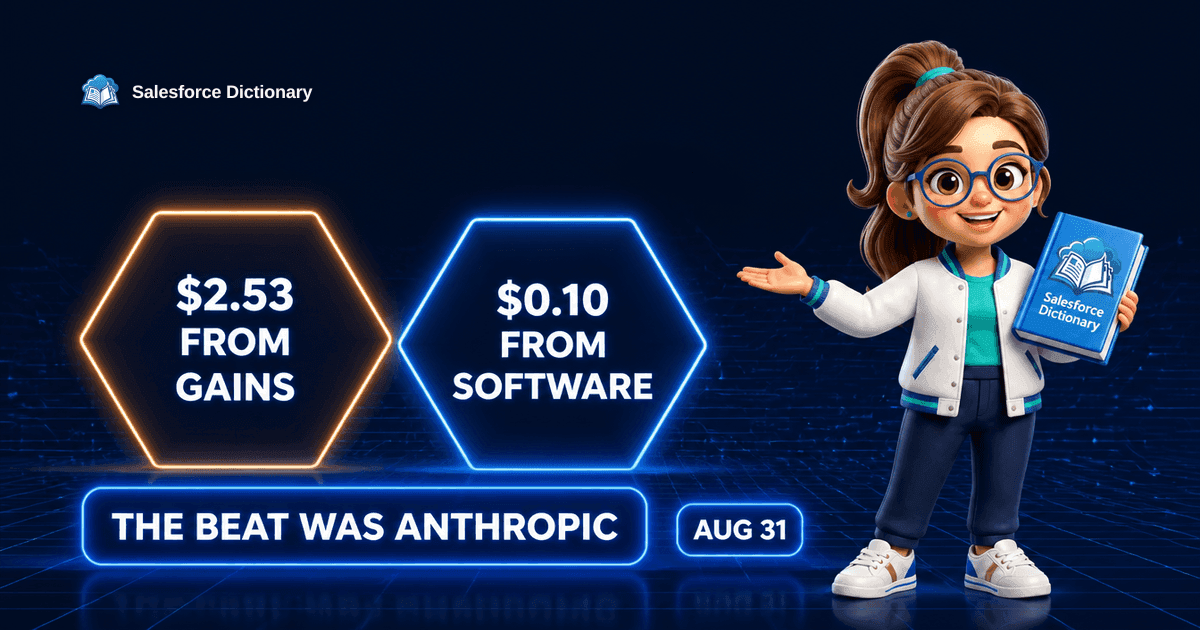
Salesforce's $5.90 earnings headline included $2.53 from a mark on its Anthropic stake. Here is what the quarter looks like once that line is set aside, and which number actually describes your renewal.
The Winter '27 Enforcement Shuffle
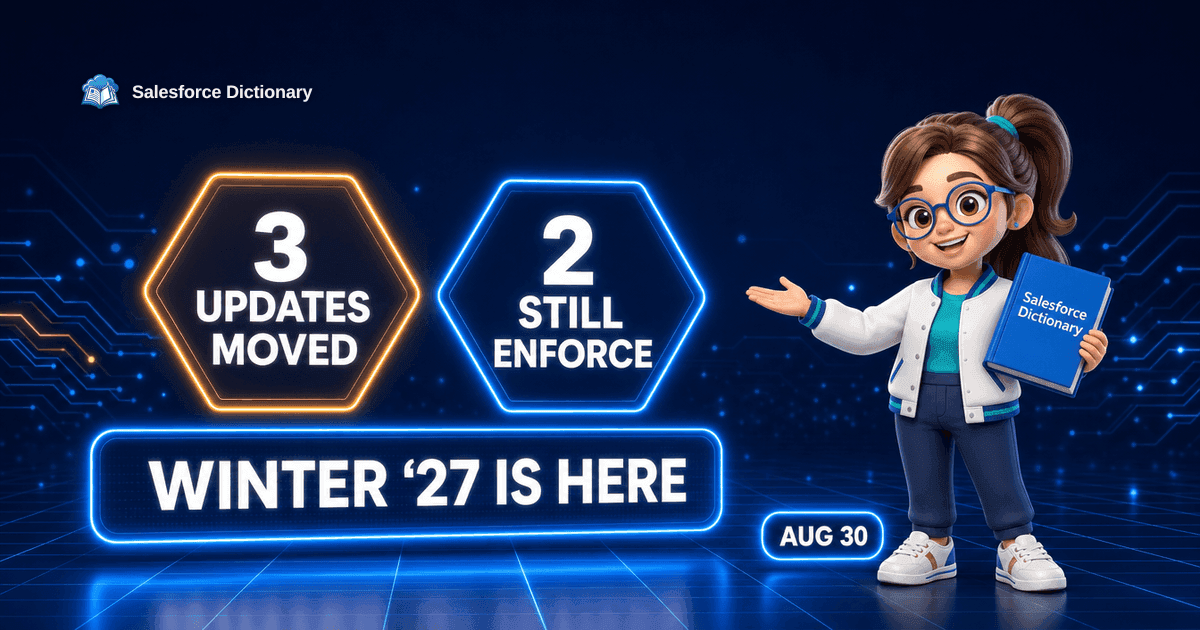
Winter '27 started landing in production this weekend with a shorter enforcement list than the one published on August 19. Three release updates moved out, two still bite, and the checklists disagree. Here is the current state.
Data 360 MCP Server Goes Live
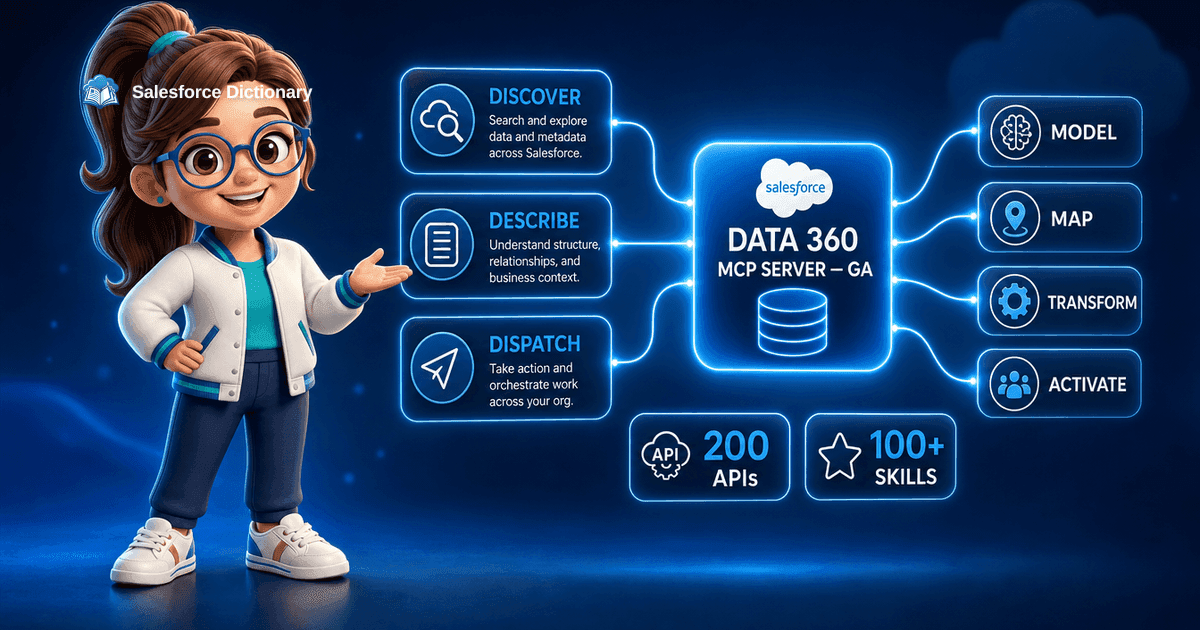
Salesforce shipped the Data 360 MCP Server to GA yesterday along with a 100 plus Skills repository, but left the umbrella Headless 360 MCP Server in open beta. Here is what actually shipped and what to test before Dreamforce.
Comments
No comments yet. Start the conversation.
Sign in to share your take on this article. Your account works across every page.