
Salesforce's Beat Was Anthropic
Salesforce posted $5.90 in non-GAAP earnings per share against a $3.27 consensus, and $2.53 of that came from a gain on shares in a private company. Five days later the arithmetic has settled and the operating beat is about ten cents. The numbers that describe your renewal are elsewhere in the release, and they are better than the headline suggests they should be.
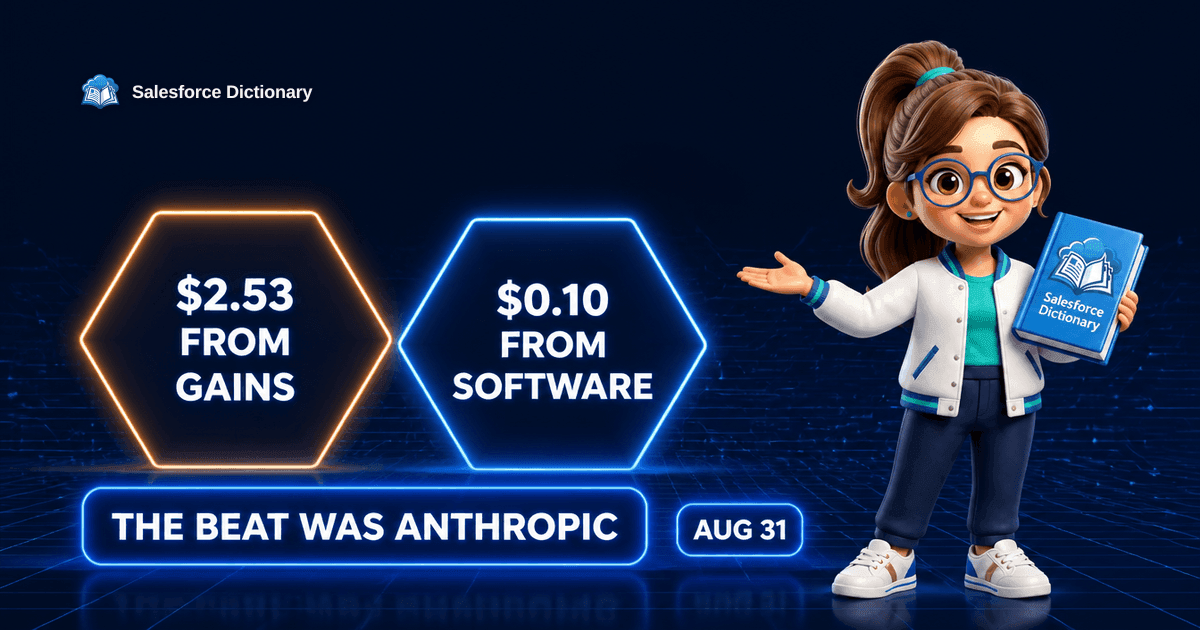
Salesforce reported $5.90 in non-GAAP earnings per share on Wednesday. Analysts had modelled $3.27. Take out one line, a paper gain on shares in a private company Salesforce does not control, and the figure is about $3.37.
That single line is worth $2.53 of the $2.63 beat. The operating business beat consensus by roughly ten cents.
None of this is hidden. Salesforce prints the number in its own release: gains on strategic investments added $2.43 to GAAP diluted EPS and $2.53 to non-GAAP diluted EPS. It took the market a few days to price the distinction, and the ecosystem coverage has mostly stopped at the headline. The quarter underneath is more interesting than either version.
What $5.90 Is Made Of
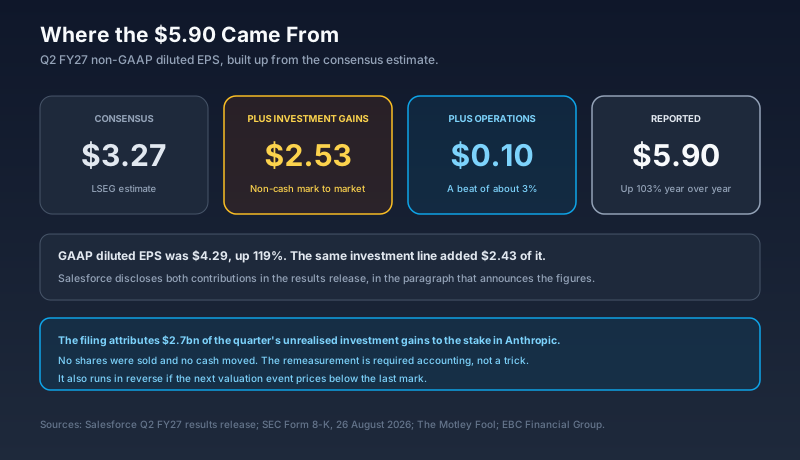
GAAP diluted EPS was $4.29, up 119% year over year. Non-GAAP diluted EPS was $5.90, up 103%. Both figures carry the investment line, and Salesforce says so in the same paragraph that announces them.
The Motley Fool read the filing and put $2.7 billion of the quarter's unrealised investment gains against Salesforce's stake in Anthropic. That is a mark to market on a private holding. No shares were sold, no cash moved, and the same mechanism runs in reverse if Anthropic's next valuation event comes in below the last one.
Two things are true at once here. The accounting is required, not creative: equity holdings get remeasured, and Salesforce discloses the amount plainly. And a company whose reported profit doubles because a private AI lab was revalued has told you very little about how much software it sold.
Most software companies strip gains like this out of their adjusted numbers. Salesforce keeps them in and then quantifies them to the cent, which is why the headline moved as far as it did and why the correction took until the weekend to circulate.
The market did the easy arithmetic first. Shares rose more than 20% in the session that followed, the second-best day in the company's history, on revenue that landed roughly in line with expectations. The slower arithmetic, the one that separates $2.53 from about ten cents, turned up in the notes published over the two days after that.
The Line That Sells Software
Set the investment line aside and read the operating page.
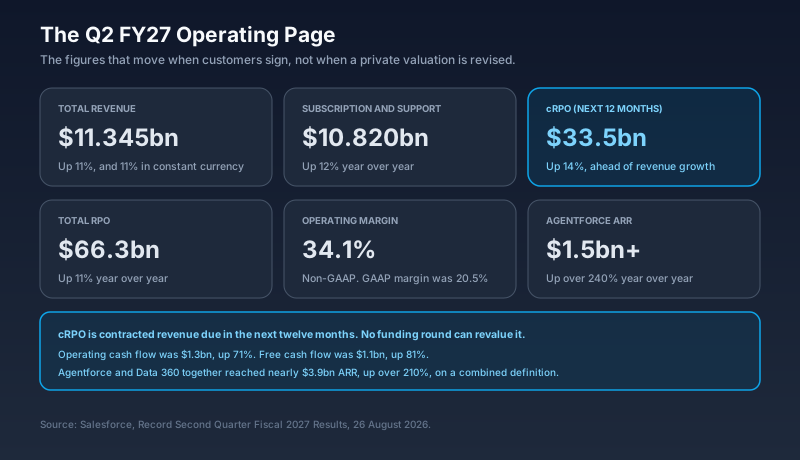
Revenue was $11.345 billion, up 11% year over year and 11% in constant currency. Subscription and support revenue was $10.820 billion, up 12%. Non-GAAP operating margin came in at 34.1%, GAAP at 20.5%. Operating cash flow was $1.3 billion, up 71%.
The number that matters most to anyone with a renewal coming is cRPO, the contracted revenue Salesforce expects to recognise in the next twelve months. It reached $33.5 billion, up 14% year over year. Total RPO was $66.3 billion, up 11%.
Read those two against revenue growth of 11% and the shape is clear. Customers are signing faster than Salesforce is recognising, which is the opposite of what the "AI eats SaaS" case predicted for this print. Management described the fastest new-order growth in four years. cRPO cannot be revalued by somebody else's funding round, so it is the honest gauge of demand in this release.
Agentforce ARR passed $1.5 billion, up more than 240%. Agentforce and Data 360 together reached nearly $3.9 billion, up more than 210%.
Treat that pairing carefully. Bundling a two-year-old product line with Data 360 produces a bigger number and a faster growth rate than either would alone, and the TD Cowen partner survey we covered on August 27 found only a third of Salesforce partners reporting strong customer interest, down from the prior quarter. Agentforce is selling. It is not yet visibly landing in the implementation channel that has to deliver it.
The Proof Point Salesforce Keeps Citing
Pressed this week on where the agent return actually shows up, Salesforce keeps pointing inward. Benioff told CNBC that the company rebalanced its own support organisation from roughly 9,000 people to about 5,000, with a large share redeployed into other teams rather than cut, and that its agentic support now handles a conversation volume comparable to the human queue at similar customer satisfaction scores.
Take it as a real data point with a caveat stapled to it. Salesforce runs the newest builds, has unrestricted internal access to its own product, and staffs the rollout with the people who wrote the thing. It is the most favourable implementation of Agentforce that exists anywhere. When that figure comes back at you from a finance stakeholder, the accurate response is that your ceiling is lower, and that the reason is data quality rather than product capability. KeyBanc reached the same conclusion about the wider customer base earlier this month.
Salesforce Owns A Piece Of Its Own Interface Risk
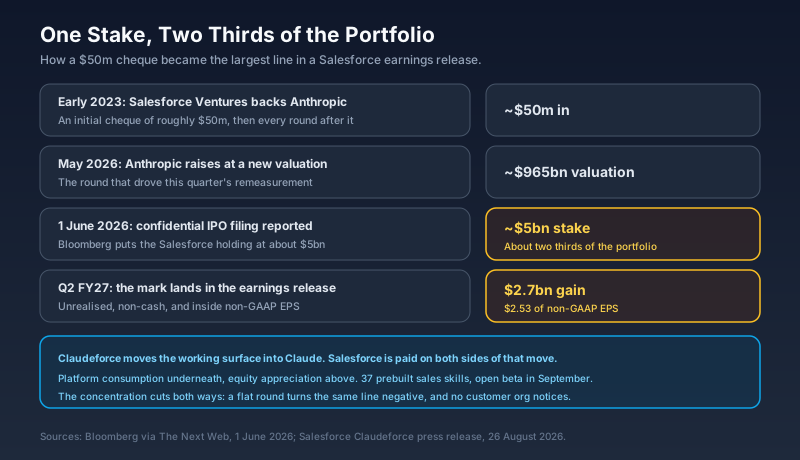
Salesforce Ventures put roughly $50 million into Anthropic in early 2023 and joined every round after it. Anthropic's May funding round valued the company at about $965 billion. By the start of June, Bloomberg reported the stake at around $5 billion, ahead of Anthropic's confidential IPO filing, which put one holding at roughly two thirds of Salesforce's entire strategic investment portfolio.
That concentration explains something about product strategy that the product announcements do not.
Claudeforce, announced the same evening as the results, puts live CRM records inside Anthropic's Claude through 37 prebuilt sales skills, with open beta expected in September. On its face, a vendor letting a rival interface become the place where sellers do their work is a concession. Financially it is closer to a hedge. Salesforce gets paid for the platform consumption underneath and it gets paid again when Anthropic appreciates.
This is the part worth carrying into your architecture reviews. A company whose economics improve when the working surface moves off its own screens is going to keep shipping in that direction. Design for it. The durable investments are the ones underneath the interface: the API layer, MCP servers, external client apps with real OAuth flows, permission and sharing models that behave correctly when the caller is an agent rather than a browser session.
The risk runs the other way too. If Anthropic's IPO prices below the last private mark, that same earnings line goes negative and the headline EPS drops with it. Nothing in your org changes when that happens. That is precisely why you should not build a budget argument on this quarter's profit figure.
The Guide Is The Tell
Guidance is where a company says what it thinks its operating business can do, and it is the cleanest read in the release because nobody guides to a future mark to market.
For Q3, Salesforce guided revenue of $11.42 billion to $11.5 billion, growth of 11% to 12%, with cRPO growth of approximately 14% and non-GAAP diluted EPS of $3.42 to $3.44. Compare that EPS range against the roughly $3.37 the operating business produced this quarter. The company is guiding the software engine to grow a couple of cents, not to double.
For the full year, revenue of $46.1 billion to $46.4 billion, non-GAAP EPS of $16.67 to $16.71, and non-GAAP operating margin of 34.3%. Operating cash flow growth is guided at approximately 4% to 5% for the year against 71% in the quarter, which tells you the cash comparison normalises from here.
Analysts landed in very different places on the same page of numbers. Wells Fargo raised its target to $230 and stayed at equal weight. UBS moved to $240. Truist went to $300 with a buy rating, citing sustainable organic growth. Seventy dollars of disagreement, one set of results, and the split runs exactly along the question of whether cRPO at 14% is a trend or a quarter.
What To Do This Week
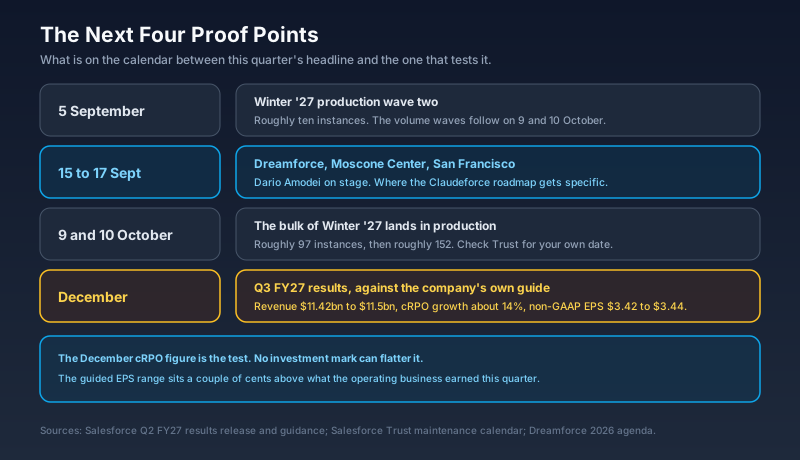
Four things, and none of them require an opinion about the stock.
Quote cRPO, not EPS. If you are building a case for budget, platform investment or headcount off this quarter, use cRPO growth of 14% and Agentforce ARR growth. Take the $5.90 to a finance stakeholder who reads filings and you will spend the meeting explaining an investment gain instead of your roadmap.
Assume less discount room this cycle. The fastest new-order growth in four years and cRPO running ahead of revenue is not the profile of a sales organisation under pressure to close at any price. If you have an Agentforce expansion or a Flex Credits commitment to negotiate, the pre-Dreamforce window is the better one.
Check whether your integration roadmap still assumes one front door. The money says Salesforce is comfortable with agents working outside its own UI. Audit what breaks when the caller is an agent: sharing rules that assumed a logged-in human, field-level security tested only through page layouts, integration users provisioned before anyone considered agent traffic.
Put the real test dates in the calendar. Winter '27 wave two lands on September 5. Dreamforce runs September 15 to 17, with Dario Amodei on stage, which is where the Claudeforce roadmap will get specific. Then the December print, where cRPO either holds near 14% or it does not. That third date is the one that tells you whether this quarter described a business or a valuation.
The good news for anyone running a Salesforce org is that the quarter underneath the headline was genuinely solid. The caution is that the headline was mostly about a company you do not buy licences from.
About the Author
Dipojjal Chakrabarti is a B2C Solution Architect with 29 Salesforce certifications and over 13 years in the Salesforce ecosystem. He writes and edits salesforcedictionary.com, published by KineticBit Inc., to help admins, developers, architects, and cert/interview candidates sharpen their fundamentals. More about Dipojjal.
Share this article
Sources
- Salesforce Delivers Record Second Quarter Fiscal 2027 Results (Salesforce Investor Relations)
- Salesforce, Inc. Form 8-K filed 26 August 2026 (SEC EDGAR)
- Salesforce stock jumps on AI growth and Anthropic investment gain (CNBC)
- Salesforce Stock Just Soared. Thank Anthropic. (The Motley Fool)
- Salesforce Stock Surges, but 96% of Its EPS Surprise Came From Investments (EBC Financial Group)
- Salesforce Forecasts $11.5 Billion in Third-Quarter Sales, Beating Estimates (Bloomberg)
- Salesforce and Anthropic Announce Claudeforce (Salesforce Press Release)
- Salesforce's Anthropic stake hits $5B ahead of IPO filing (The Next Web)
- Salesforce given new $230.00 price target at Wells Fargo (Defense World)
- Marc Benioff is getting his mojo back as Salesforce lifts its AI growth view (CNBC)
- Salesforce (CRM) Q2 2027 Earnings Call Transcript (The Motley Fool)
- Dreamforce 2026 (Salesforce)
Related dictionary terms
Practise it
Five questions on Agentforce Specialist
Exam-style questions with an explanation after each one. No account needed, and your answers build a weak-topic map once you have one.
More news
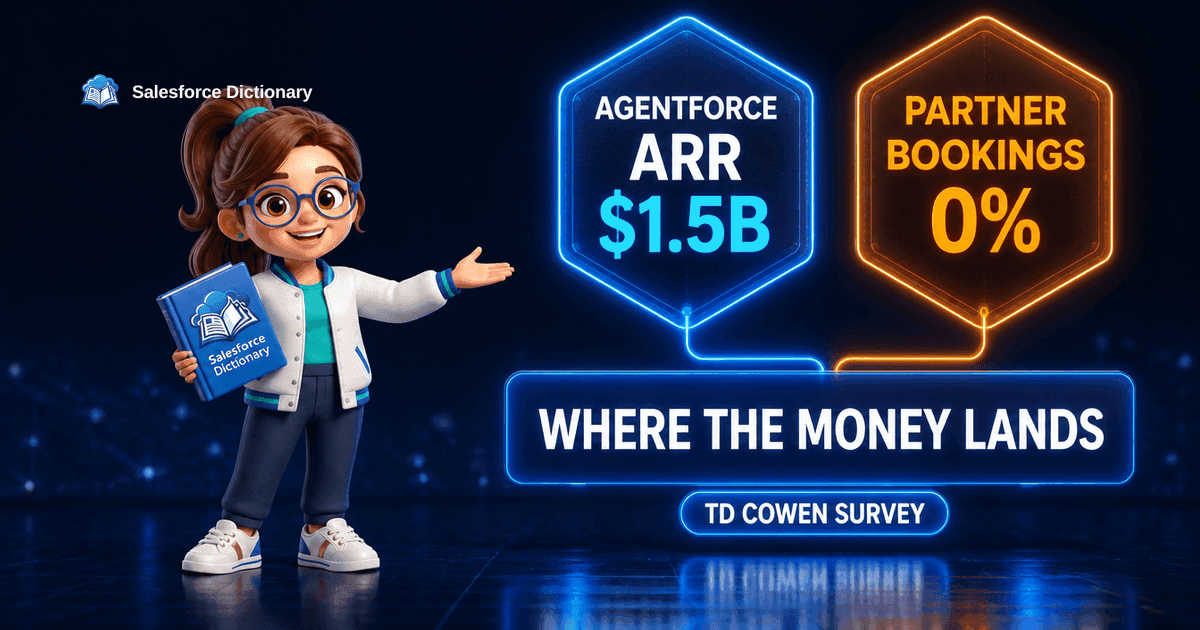
Partners See No Agentforce Revenue
Salesforce reported Agentforce ARR past $1.5 billion this week. A TD Cowen partner survey found zero partners crediting Agentforce for bookings. Here is why both numbers are true and what it changes for the channel.
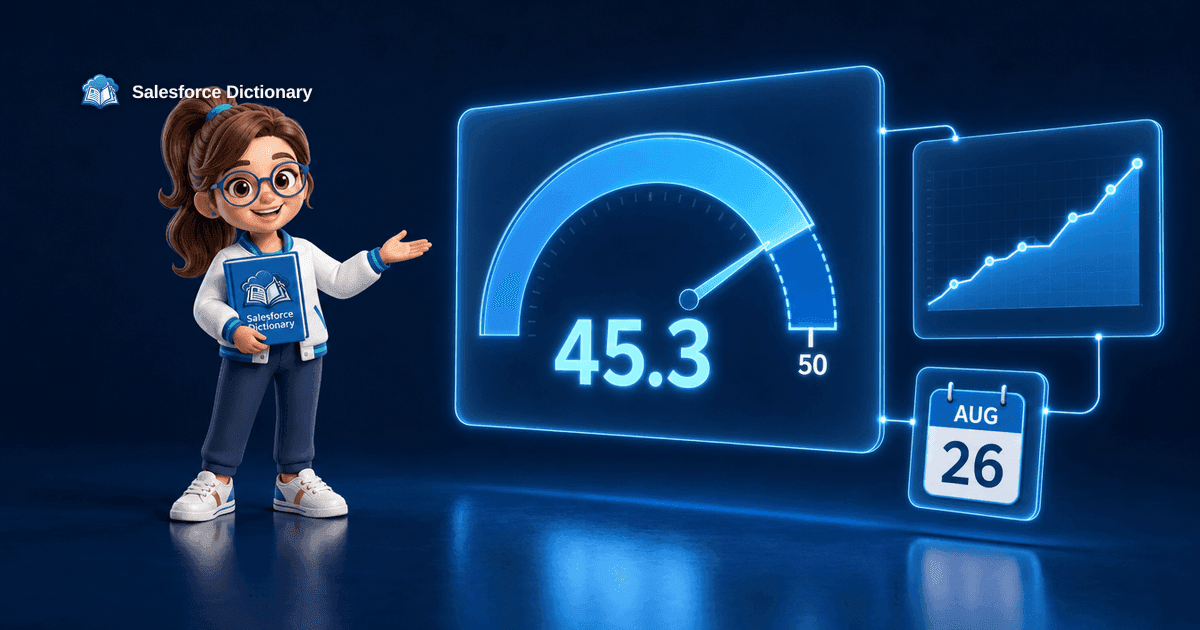
Salesforce's Rule of 50 Gap
J.P. Morgan started coverage of Salesforce at Overweight with a $250 target on Thursday, a day after UBS warned about the setup into August 26 earnings. Both notes turn on the same 4.7 points.

Salesforce's $5B Anthropic Windfall
Bloomberg valued Salesforce's Anthropic stake at about $5 billion on June 1, after Anthropic raised $65 billion at a $965 billion valuation and filed confidentially for an IPO. CRM jumped nearly 10 percent on a roughly 100x paper return.

Architects Price In Platform Risk
Salesforce Ben published its 2026 salary report and its architect career-risk breakdown on the same day. Senior architect medians run $165,000 to $210,000, and a quarter of architects now rank the platform losing its lead as their top risk.
Comments
No comments yet. Start the conversation.
Sign in to share your take on this article. Your account works across every page.