
Salesforce Leadership Overhaul
Two departures, two promotions, 1,000 layoffs, and a pledge to hire 1,000 AI-native graduates. Salesforce rewires its org chart for the AI era.
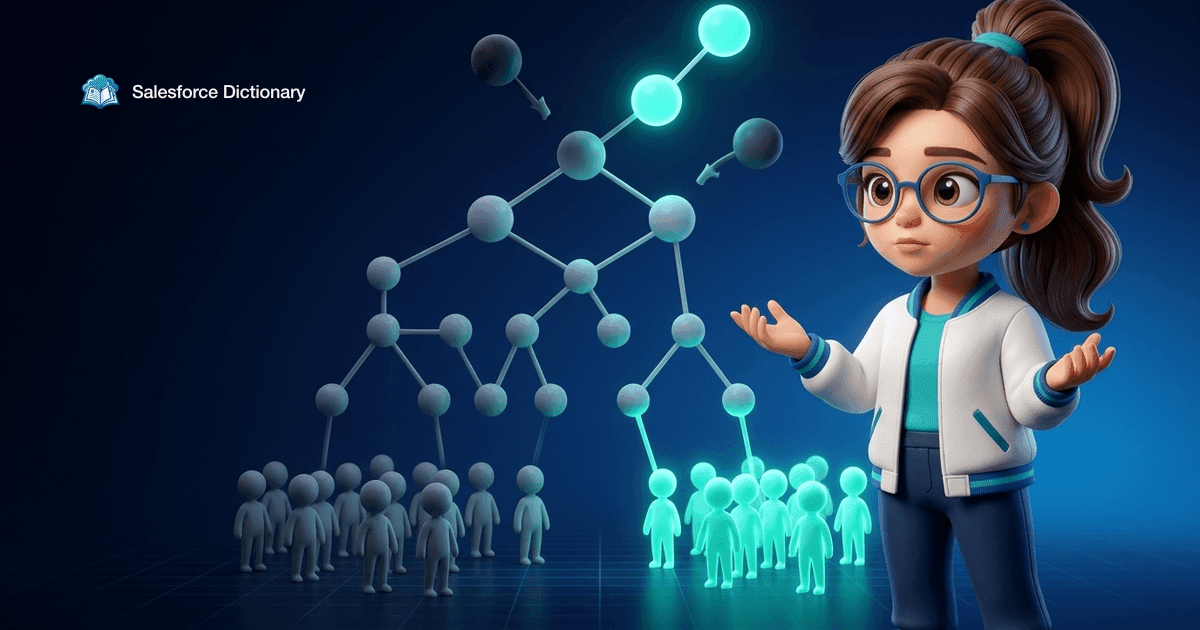
Salesforce is undergoing one of the most significant leadership reshuffles in its 27-year history, as CEO Marc Benioff moves to reshape the company around an AI-first operating model. In the first week of May 2026, the cloud software giant lost two of its most senior product leaders, restructured its enterprise technology organization under a single executive, and simultaneously cut roughly 1,000 jobs while pledging to hire 1,000 AI-native graduates. The moves arrive at a delicate moment for the company. CRM shares are down approximately 30 percent year-to-date, a $25 billion buyback is underway, and Wall Street is bracing for the Q1 FY27 earnings print on May 27.
Taken together, the changes mark a clear pivot. Salesforce is no longer simply layering AI features onto its existing CRM stack. It is rebuilding the org chart, the talent pipeline, and the product reporting lines around Agentforce, the agentic AI platform that Benioff has staked the company's next decade on. For customers, partners, and the sprawling ecosystem of admins and developers who depend on the platform, the questions are immediate. Who is now in charge of what? What does it mean for the Agentforce roadmap? And how should teams plan their FY27 investments?
The Agentforce Architect Walks, a New Lieutenant Steps Up
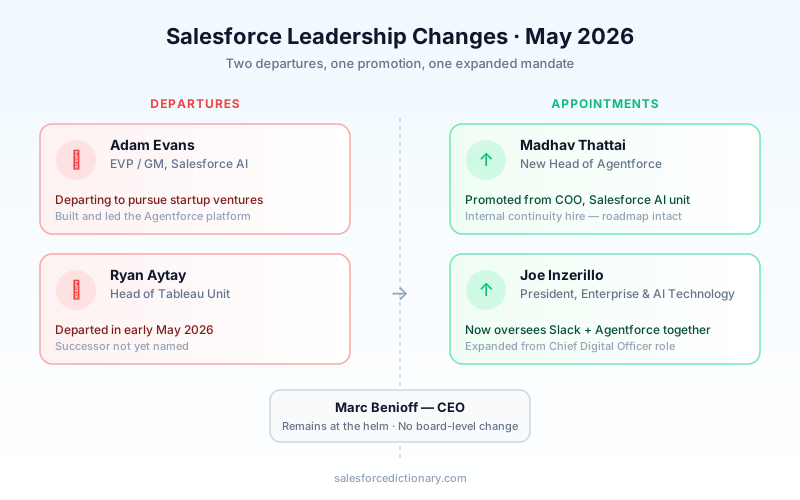
The most consequential departure is Adam Evans, EVP and GM of Salesforce AI, who confirmed in early May that he is leaving the company to pursue startup ventures. Evans was the executive most directly associated with the architecture and go-to-market story of Agentforce, the platform Salesforce launched in late 2024 and has since positioned as the centerpiece of every keynote, earnings call, and analyst day. As reported by Salesforce Ben in its coverage of the leadership shakeup, Evans had become the public face of Salesforce's agentic AI ambitions, frequently appearing alongside Benioff at Dreamforce and on the road to walk customers through Agentforce 2.0 and 3.0 milestones.
His replacement is Madhav Thattai, who has been promoted from COO of the Salesforce AI unit to lead the Agentforce development organization. Thattai is an internal hire with deep operational knowledge of the AI org's roadmap, engineering cadence, and customer commitments. A continuity choice rather than a reset. According to Inc.'s reporting on the reorganization, Thattai's elevation is intended to keep the Agentforce engineering machine running without a public roadmap reset, even as the broader org chart shifts above him. Practitioners who have spent the last year aligning their architectures to the published Agentforce roadmap can read this as a signal that the major commitments stand. The pace and the prioritization may shift, but the platform direction does not.
The second senior departure is Ryan Aytay, who led the Tableau unit. Aytay's exit removes another long-tenured product leader from Benioff's bench at a moment when Tableau's role inside the AI stack matters more than it has in years, particularly as the analytics layer feeding Agentforce reasoning. Salesforce has not yet named a permanent successor for Tableau, and CIO's coverage of the "executive leadership churn" notes that several Tableau product lines are now reporting upward into the broader Enterprise and AI Technology org. That kind of reporting-line consolidation usually precedes a roadmap rationalization, so Tableau customers should watch the next two quarterly product releases for signs of feature pruning or re-bundling.
That broader org is now run by Joe Inzerillo. Previously Salesforce's Chief Digital Officer, Inzerillo has been given an expanded title, President of Enterprise and AI Technology, and now oversees both Slack and the Agentforce platform under a single leadership umbrella. Consolidating Slack and Agentforce under one executive is a notable structural decision. It signals that Salesforce sees the conversational surface (Slack) and the agentic runtime (Agentforce) as a single product surface area rather than two adjacent businesses. For practitioners, this is the change with the most concrete downstream implications, because it almost certainly accelerates the integration of Slack as the default UI for Agentforce-powered workflows. Anyone designing an enterprise rollout that assumed Slack and Agentforce would remain separately governed should revisit that assumption this quarter.
A Workforce Reset: 1,000 Out, 1,000 In
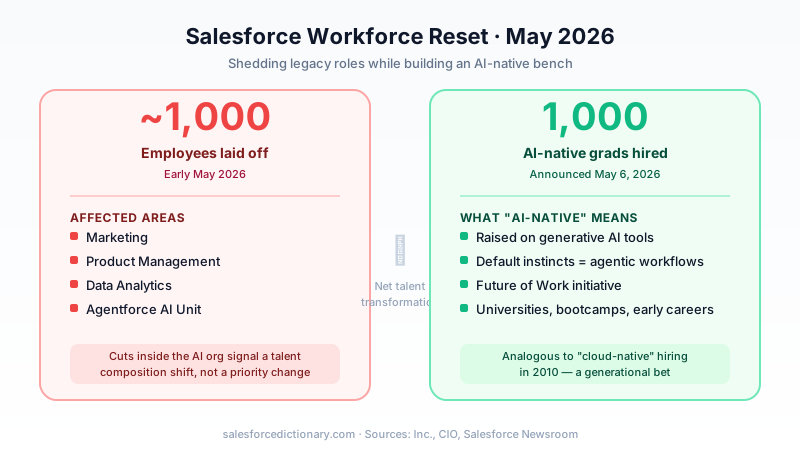
Even as the executive suite was being rearranged, Salesforce confirmed it had laid off approximately 1,000 employees in early May. According to Inc. and CIO, the cuts were concentrated in marketing, product management, data analytics, and the Agentforce AI unit itself. That last detail is worth dwelling on. Trimming headcount inside the very org that the company is doubling down on publicly is not a contradiction so much as a statement of intent. Salesforce is reshaping the composition of that team, not its priority. The implicit message is that the skills profile required to ship the next generation of Agentforce is different from the one that shipped versions 2.0 and 3.0.
The other half of the workforce story landed on May 6, when Salesforce announced through its newsroom that it had committed to hiring 1,000 AI-native graduates as part of its Future of Work initiative. The framing matters. Salesforce is not simply backfilling roles. It is explicitly seeking talent that has come up through university programs, bootcamps, and early careers shaped by generative and agentic AI from day one. In Benioff's framing, an "AI-native" hire is to 2026 what a "cloud-native" hire was to 2010: a candidate whose default instincts already match the platform the company is selling. Expect new-grad pay bands and equity packages to skew higher than usual for the cohort, because Salesforce will be competing for these candidates against OpenAI, Anthropic, and a long list of AI-first startups.
For Salesforce practitioners, the practical implications of this two-sided workforce move are real:
- Admins should expect Agentforce-related product velocity to remain high, but with potentially different points of contact at Salesforce. Account team rosters and product-team escalation paths are likely to churn through Q2. Keep a running log of any case-handle changes; you will need it when a roadmap question routes to a new owner mid-quarter.
- Developers building on the Agentforce SDK, Apex actions, and Data Cloud activations should anticipate roadmap clarifications, not reversals, once Thattai's team publishes its updated priorities. Historically, leadership transitions of this size produce a 60-to-90-day window where some features slip and others are quietly accelerated. Star issues on the GitHub trailheadapps repos that matter to your team; that is the cheapest early-warning signal you will get.
- Partners and ISVs on AppExchange will want to revalidate co-selling motions and joint roadmap commitments, particularly any tied to Tableau Pulse, Tableau Next, or Slack-as-Agentforce-surface integrations now sitting under Inzerillo. Get your alliance manager on a 30-minute call before the end of May to confirm those commitments survived the reorg.
- Architects planning multi-year Agentforce rollouts should treat the next two quarters as a window to renegotiate enterprise license agreements. Vendor reorganizations of this magnitude historically open commercial flexibility that did not exist three months earlier, especially on consumption-based products where Salesforce is incentivized to lock in attach commitments before earnings.
It bears flagging what has not changed. Marc Benioff remains CEO. There is no indication of a board-level intervention, no activist investor publicly agitating for his seat, and no signal that the CFO or COO offices are next. The reshuffle is being run from the top, not imposed on the top.
The Strategic and Financial Backdrop
The leadership and workforce moves do not exist in isolation. CRM stock is down approximately 30 percent year-to-date in 2026, a meaningful underperformance against a software peer group that has broadly benefited from AI tailwinds. In response, Salesforce has authorized a $25 billion share buyback, one of the largest in the company's history, which functions both as a capital-return signal to shareholders and as an implicit statement that management views the current share price as undervalued relative to the Agentforce thesis. A buyback of that size is also a bet on the company's own forward earnings, since every share repurchased compounds the EPS impact of any future revenue acceleration.
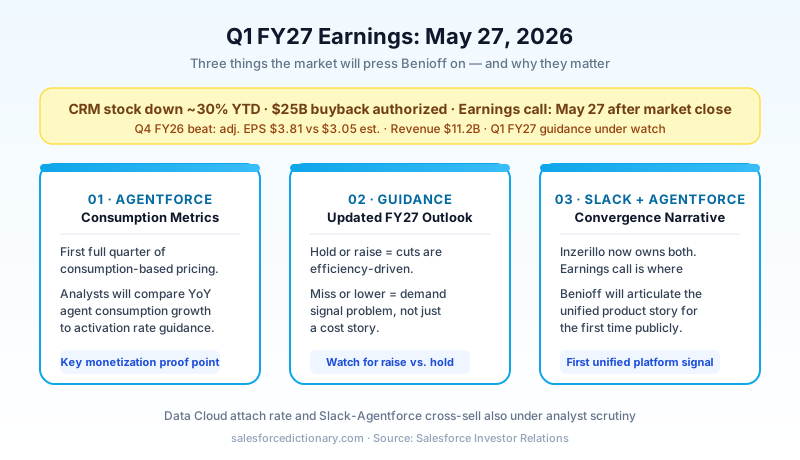
The next major test is Tuesday, May 27, when Salesforce is scheduled to release its Q1 FY27 earnings, per the company's investor relations site. That report will be the first quantitative read on whether the Agentforce monetization story (paid agent consumption, Data Cloud attach rates, and Slack-Agentforce cross-sell) is translating into revenue at the pace the company has guided. It will also be the first earnings call where analysts can question Benioff directly about the leadership changes, the 1,000-person reduction, and Inzerillo's expanded mandate. Expect the prepared remarks to be tightly scripted around three talking points: agent consumption growth, Data 360 attach, and the strategic logic behind unifying Slack and Agentforce.
Three things are worth watching on the call:
- Agentforce consumption metrics. Salesforce introduced consumption-based pricing for Agentforce in 2025. Q1 FY27 will be the first full quarter where investors can compare year-over-year consumption growth, and the print will set the baseline analysts use for the rest of the fiscal year.
- Updated FY27 guidance. If Salesforce holds or raises its full-year guidance despite the layoffs, the market will read it as confirmation that the cuts are efficiency-driven, not demand-driven. A tightening of the range, especially on the high end, would say the opposite.
- Commentary on the Slack-Agentforce convergence. Inzerillo's expanded role implies a unified product narrative. The call is the natural venue to articulate it publicly for the first time, and any specifics on packaging, pricing, or co-licensing will move the stock.
What This Means for the Ecosystem
Zoom out, and the May 2026 reshuffle tells a coherent story. Salesforce is acknowledging, through its org chart, its hiring profile, and its capital allocation, that the company that sells Agentforce cannot be structured the way the company that sold Sales Cloud was structured. The departures of Evans and Aytay close a chapter shaped by acquisition-led product expansion. The promotions of Thattai and Inzerillo open a chapter defined by tighter integration, fewer reporting lines between Slack and Agentforce, and a deliberate refresh of the talent base toward engineers and go-to-market staff who think in agents first. The internal narrative will reframe Slack from "the collaboration product Salesforce acquired" to "the default UI of the agentic platform Salesforce is building."
For the Salesforce practitioner community, the message is to plan for continuity in product direction but volatility in execution touchpoints over the next two quarters. Roadmaps will not be torn up. Account teams might be. The Agentforce platform is not being deprioritized. It is being staffed differently. The single most useful thing any architect, admin, or partner can do over the next 30 days is to map their Salesforce relationships to a name, confirm those names still own what they did in April, and update the contact list accordingly.
May 27 will be the moment the market decides whether to take Benioff at his word. If the Q1 FY27 numbers validate Agentforce monetization, the May reshuffle will be remembered as the quarter Salesforce successfully rewired itself for the AI era. If they disappoint, the same set of moves will look very different in retrospect, and the executive churn that began this month may not be finished.
About the Author
Dipojjal Chakrabarti is a B2C Solution Architect with 29 Salesforce certifications and over 13 years in the Salesforce ecosystem. He writes and edits salesforcedictionary.com, published by KineticBit Inc., to help admins, developers, architects, and cert/interview candidates sharpen their fundamentals. More about Dipojjal.
Share this article
Sources
Related dictionary terms
Practise it
Five questions on Agentforce Specialist
Exam-style questions with an explanation after each one. No account needed, and your answers build a weak-topic map once you have one.
Comments
No comments yet. Start the conversation.
Sign in to share your take on this article. Your account works across every page.